Posts

Showing posts with the label portland cement

Which is best cement for plastering PPC cement or OPC cement?

Image
When it comes to plastering, the type of cement used can play a crucial role in determining the strength, durability, and overall quality of the finished product. The two most popular plastering cement types are PPC (Portland Pozzolana Cement) and OPC (Ordinary Portland Cement). Both types have their own unique properties and benefits; determining which is best for plastering ultimately depends on the specific project requirements and budget. PPC cement:   It is a type of blended cement that is made by mixing Portland cement with pozzolanic materials such as fly ash, volcanic ash, or calcined clay. The addition of these materials not only enhances the strength and durability of the cement but also reduces the amount of heat generated during the curing process. This makes PPC cement ideal for use in plastering applications, as it results in a smoother and more even finish. The pozzolanic materials in PPC cement react with the calcium hydroxide produced by the hydration of cement, r...

The Benefits of Using Portland Concrete for Landscaping and Hardscaping Projects

Image
  Landscaping and hardscaping projects have become increasingly popular in recent years. People are now more conscious of the importance of outdoor spaces and the value they add to their homes. One key aspect of these projects is the use of concrete, specifically Portland concrete . Portland concrete is a type of concrete that is made with Portland cement , a type of cement that was first produced in the 1800s. It has become the most widely used type of cement in the world due to its strength, durability, and versatility. It is used in a wide range of applications, including roads, bridges, buildings, and landscaping projects. If you are planning a landscaping or hardscaping project, here are some of the benefits of using Portland concrete: Durability and longevity One of the main benefits of using Portland concrete for landscaping and hardscaping projects is its durability and longevity. Portland concrete is designed to withstand harsh weather conditions, extreme temperatures, and...

What is the importance of non-trade cement and why should you care?

Image
India, a developing nation, has many infrastructure and construction projects which require a huge amount of cement. Cement is one of India's most consumed raw materials; thus, it is the main ingredient of any foundation. In India, cement is marketed in two mechanisms. They are Trade Cement marketing and Non-Trade Cement marketing. Trade Cement marketing Trade Cement marketing is where a cement dealer buys the cement from the company and puts the cement for sale through his retail shop. Under this mechanism, taxes such as VAT and GST are levied, and so in this type of marketing, the Selling price involves shares of dealers, distributors, and retailers. Because of this, a customer pays more than the production cost. Trade cement is more costly than non-trade cement because it involves a share of the dealers. Non-Trade Cement marketing Non-Trade Cement marketing is where the cement is purchased directly from the cement factory. The manufacturer sells the cement directly to its cus...

Tips to Help You Find the Best Portland Cement Company

Image
People often think about what the project should look like, what kind of designs a person should look out for, which raw materials you should use, what amenities they should provide, etc. But people often neglect or do not give much attention to those things which are of utmost importance. When you are working on any construction project, you want the best cement company to ensure that the cement will last long. Cement is the bonding agent that puts everything together and without high-quality cement, building a solid foundation is next to impossible. Following are the factors one should consider while looking for the best portland cement for construction. Types of cement:  There are 23 different types of cement commercially used in India. Based on its constituents, each type of cement has its advantages, applications, and uses. The grade indicates the compressive strength of the cement, which helps in building the foundation of any project. The most commonly used cement are Port...

How to effectively maintain concrete floors: Everything you need to know

Image
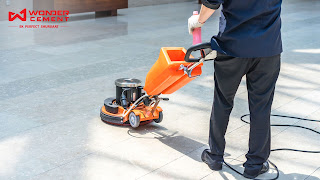
Concrete flooring is common in places like basements, driveways, parking lots, etc. But nowadays a lot of people are opting for indoor concrete flooring. As it looks aesthetically pleasing and keeps the home warmer due to its thermal mass. Moreover, concrete is durable and easy to maintain compared to other options.  Concrete floors are of different types, standard epoxy, polished concrete, quartz flooring, metallic epoxy, etc. All of them have different advantages and disadvantages, but some features are common across them all, as all of them are highly durable, economical, versatile, low-maintenance, and mostly weatherproof.  To construct a concrete floor, raw materials like rocks, granite chips, etc are mixed with cement and water. Cement here works as the primary binding agent, that’s why floors of these kinds are also generally known as cement floors or cement concrete floors. For effective construction, good quality cement like Wonder Cement works well, as it uses the b...

What is curing of concrete and which is the best way to cure concrete during winter?

Image
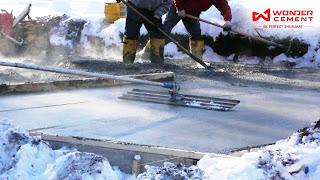
For any construction project, concrete is the essential element consisting of cement, sand, and water in suitable proportions. Concrete should be placed before it loses its plasticity and become hard. The process at which satisfactory temperature and moisture are maintained during cement hydration is known as the curing of concrete.  Curing plays a vital role in concrete's strength and durability for a reasonable period of time. The process of curing becomes more challenging in the winter season. Concrete becomes vulnerable in winter and loses its overall strength and durability. Tips to cure concrete in the weather of winter Cement manufacturers should avoid using fly ash for cement production because it sets up slowly and generates less heat.  For maximum strength and durability of concrete, it is necessary to protect concrete from freezing for the first 24 hours. The concrete settles more slowly during winter. After finishing the concrete in cold weather, you need to wait ...

Types of Cement Clinkers and their Applications

Image
A lot goes into the production of cement and various processes are also involved. One such stage involved in the production of cement is called kilning. This is the stage where cement clinker is produced. Clinkers are used to bind various cement products. The clinkers usually appear as lumps or nodules when homogenous raw materials are mixed and processed during cement production.  Cement clinker is grey and comes to form when limestone and clay are heated to the point of liquefaction in the cement manufacturing units.  Cement clinker is often stored by cement manufacturers so that it can also be used when the raw materials to produce cement are scarcely available. The best feature of cement clinker is that it can be stored in its best form for long periods without any sign of quality loss. Sometimes cement manufacturers use the stored clinkers to produce the excess requirements of cement.  Reliable cement manufacturers like Wonder Cement follow a guideline procedure wh...

Difference Between Cement and Concrete: The Lesser Known Facts

Image
People often use the names cement and concrete interchangeably. Well, sorry to burst the bubble but cement and concrete are different from each other.  Cement is used to bind various building materials that are present on a construction site. Cement is the ingredient used as an adhesive that sticks all the different building components together to form a structure.  Concrete, on the other hand, is a mixture that has cement as one of its constituents.  Concrete manufacturers usually rely on cement manufacturers like Wonder Cement that provide quality cement.  Now that we know the basic difference between the two, here are a few facts that will surprise you.  Air is one of the most important components of cement Believe it or not, the air is also a part of the overall cement composition. The cement mixture contains air pockets that impact some of its crucial characteristics.  Cement in its original form is made of only two ingredients Cement is not very co...